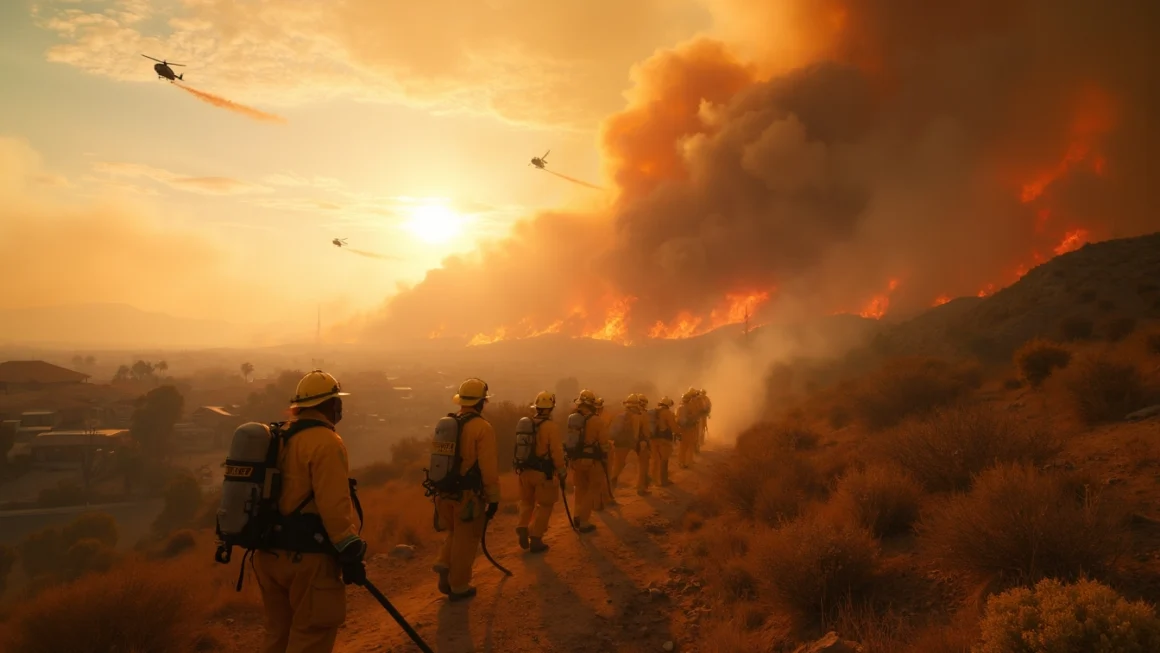
A fast-moving wildfire erupted in Southern California on Thursday, forcing thousands of residents to evacuate as firefighters battled the blaze amid challenging weather conditions. The fire, dubbed the Highland Fire, broke out in Riverside County east of Los Angeles and quickly spread to over 2,200 acres.
Rapid Spread and Evacuation Orders
Table of Contents
The Highland Fire ignited around 12:45 p.m. local time near the community of Aguanga. Fueled by strong Santa Ana winds and dry conditions, the fire expanded rapidly, prompting mandatory evacuation orders for approximately 4,000 residents in the area. The Riverside County Fire Department reported that the blaze was 0% contained as of Thursday evening.
Challenging Weather Conditions
Firefighters faced significant obstacles in their efforts to contain the fire, including:
- Wind gusts up to 30 mph
- Low humidity levels
- Temperatures in the mid-80s
These conditions created an environment conducive to the fire’s rapid spread and made it difficult for crews to establish containment lines.
Response and Resources
Multiple agencies responded to the Highland Fire, including:
- Cal Fire
- Riverside County Fire Department
- Local law enforcement agencies
Firefighting resources deployed to combat the blaze included:
- Ground crews
- Air tankers
- Helicopters
The coordinated effort aimed to protect structures and prevent further spread of the fire.
Impact on Local Communities
The Highland Fire has significantly impacted local communities in Riverside County. Evacuation centers were established to provide shelter for displaced residents. Schools in the affected areas announced closures for Friday as a precautionary measure.
Fire Season in Southern California
The Highland Fire serves as a stark reminder of the ongoing fire risks in Southern California, particularly during the fall season when Santa Ana winds are common. These winds, combined with dry vegetation and low humidity, create ideal conditions for wildfires to ignite and spread rapidly.
Historical Context
Southern California has a history of destructive wildfires, especially during the autumn months. Notable fires in recent years have caused significant damage to property and ecosystems, highlighting the importance of fire prevention and preparedness measures.
Prevention and Preparedness
In light of the Highland Fire and the ongoing fire season, residents in fire-prone areas are urged to:
- Create defensible space around their homes
- Develop and practice evacuation plans
- Stay informed about local fire conditions and warnings
- Comply with evacuation orders promptly
Fire departments and emergency management agencies continue to emphasize the importance of community preparedness in mitigating the impact of wildfires.
Climate Change and Wildfire Risks
The increasing frequency and intensity of wildfires in Southern California have been linked to climate change. Warmer temperatures, prolonged droughts, and changes in precipitation patterns contribute to more favorable conditions for wildfires. Automation tools are being utilized to monitor and predict fire risks, helping authorities and residents better prepare for potential threats.
Ongoing Efforts and Future Outlook
As firefighters continue to battle the Highland Fire, the focus remains on containment and protecting lives and property. The incident serves as a reminder of the need for ongoing vigilance, improved fire management strategies, and community cooperation in addressing the wildfire challenges faced by Southern California.
Residents are encouraged to stay updated on the latest developments through official channels and follow all safety recommendations and evacuation orders issued by local authorities. The coming days will be crucial in determining the full impact of the Highland Fire and the effectiveness of the ongoing firefighting efforts.